
In Studio with Martin Phipps
What You See, What It Took: Inside the patient process behind Night Dreamer’s reel-to-reel releases
From original master tapes and 1970s Studer machines to ten iterations of a single box, Night Dreamer’s TWINN project is shaped as much by the conditions in which it is made as by the reel that eventually leaves their workspace at Hackney Downs Studios.
Reel-to-reel is one of recorded music’s highest-fidelity formats, historically used in studios to capture and preserve master recordings. TWINN brings that format out of the studio and archive and into a contemporary listening context, producing new reel-to-reel editions directly from original master tapes.
The significance of that becomes clearer when you look at the material Night Dreamer is working with. Among TWINN’s releases is Gil Scott-Heron’s 1971 album 'Pieces of a Man', duplicated 1:1 from the original Flying Dutchman master tape. Rather than creating a new remaster or interpretation, the aim is to reproduce the archival source as faithfully as possible, giving listeners access to a version of the recording that sits unusually close to what exists in the vault.
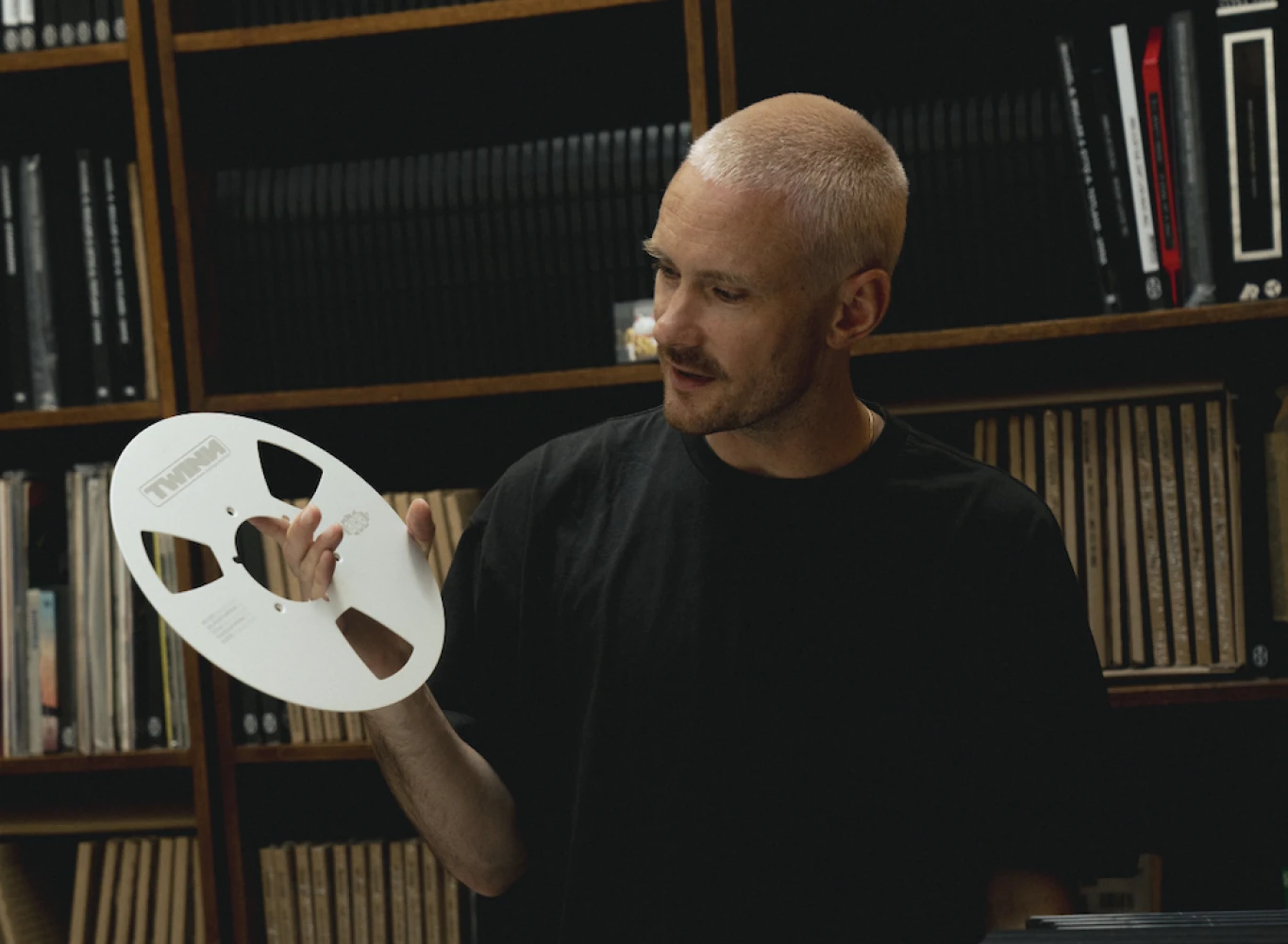
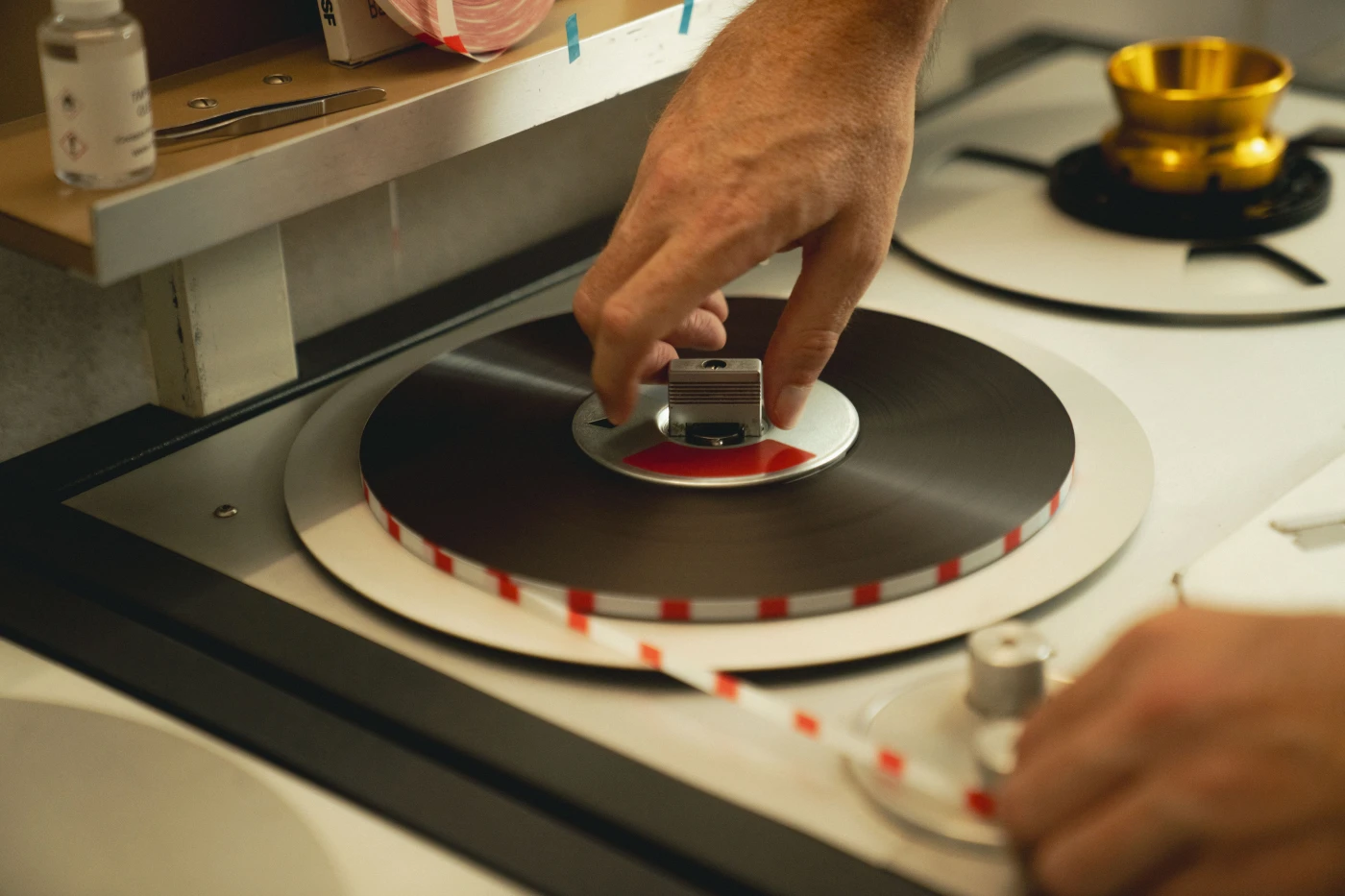
An hour-long album takes an hour to make. Not approximately, and not as a consequence of inefficiency, but because reel-to-reel duplication requires the tape to move from beginning to end at the speed at which it will eventually be heard. For Night Dreamer, whose reel-to-reel project TWINN grew out of years spent around analogue recording, that fixed relationship between time and production has become less a constraint than a way of working.
Before starting Night Dreamer, Neal Birnie first encountered reel-to-reel through his work in audio restoration, working with original master tapes sent over by labels preparing albums for reissue. Handling irreplaceable material brought its own responsibility, but access to the original tapes also meant the opportunity to get the very best from a reissue.
“Everyone would get excited when the tapes turned up because you knew you were working with the best possible source,” Neal explains. “That gave me an early glimpse into just how good the format could sound.”
Tape remained part of Night Dreamer’s practice through its analogue direct-to-disc sessions, where performances are cut live, directly to vinyl, with tape used as an analogue backup. And while much of tape’s appeal can be explained technically (the natural compression, the weight it can give to the low end, the slight roll-off in the higher frequencies), some of it sits outside technical language altogether. Neal describes it simply as “a layer of butter over the sound”.
TWINN emerged from the question that followed. If the experience was so compelling inside a studio, why should it remain there? And that’s the beauty of reel-to-reel: “You’re one step closer to being in the studio, a little closer to hearing the music as it was originally captured.”
That proximity depends on a chain of work largely absent from the finished object. Original masters first have to be secured from an artist, label or estate willing to entrust Night Dreamer with material that may be both a) incredibly valuable and b) impossible to replace. Once a tape arrives, its condition determines what can happen next, with some older recordings requiring careful treatment, including being baked in a specialist oven to remove absorbed moisture, before they can safely be played.
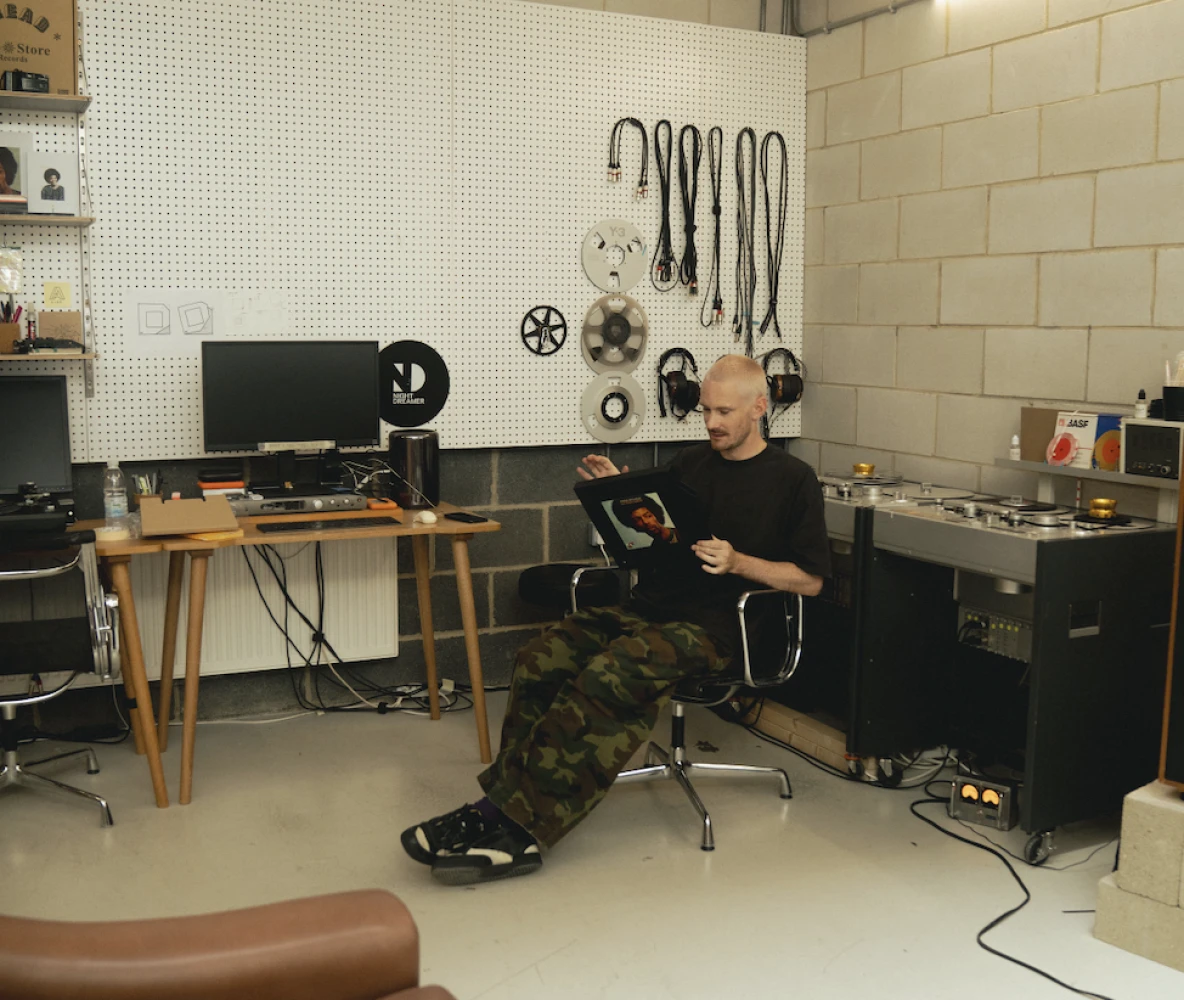
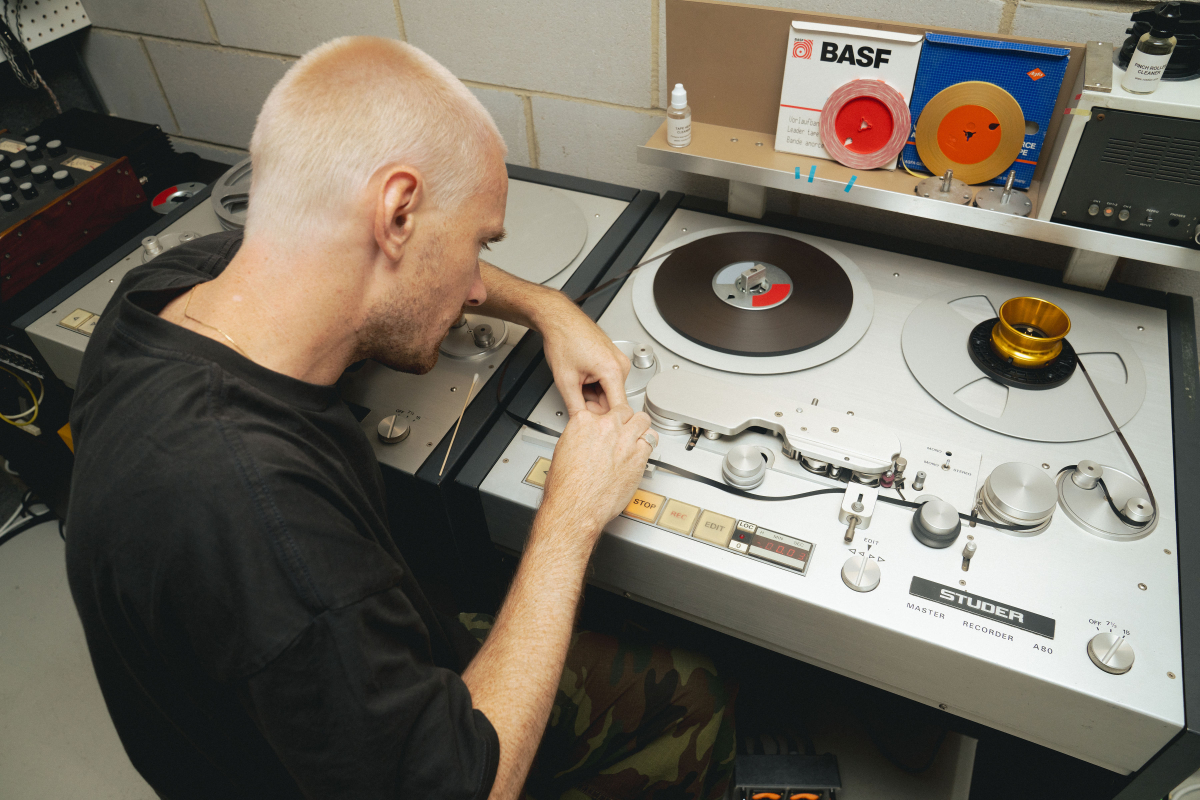
At Night Dreamer’s space in Hackney Downs Studios, two Studer A80s, relics from the 1970s yet fully functional, form the technical centre of the process, permanently set up in the space. With the two machines carefully calibrated to match one another, the original master plays on one while the other records directly onto fresh tape, allowing Neal to switch between the two as the copy is being made, listening for anything that has changed.
That continuity is part of what his space at Hackney Downs Studios makes possible. The Studer A80s remain permanently set up for transfers and duplication, while the rest of the room shifts between making releases, developing new projects and working on packaging. For Neal, having a space he can return to, where equipment can stay in place and work does not have to be packed away at the end of each session, is integral to the way Night Dreamer operates.
“It’s great to have somewhere I can come and go, leave things set up and work freely,” he says. “You should be able to walk in and understand pretty quickly what we do here.”
Having the machines permanently set up also means Neal can focus on getting the transfer as close to the original as possible.
“You’re listening for any difference. A change in level, tone, detail, anything that tells you something has shifted between the two,” he explains. “The aim isn’t to improve it or add anything of our own. It’s actually the opposite. You want to get out of the way and make that transfer as faithful to the original as possible.” Indeed, it’s a meticulous process, with every transfer checked closely from beginning to end.
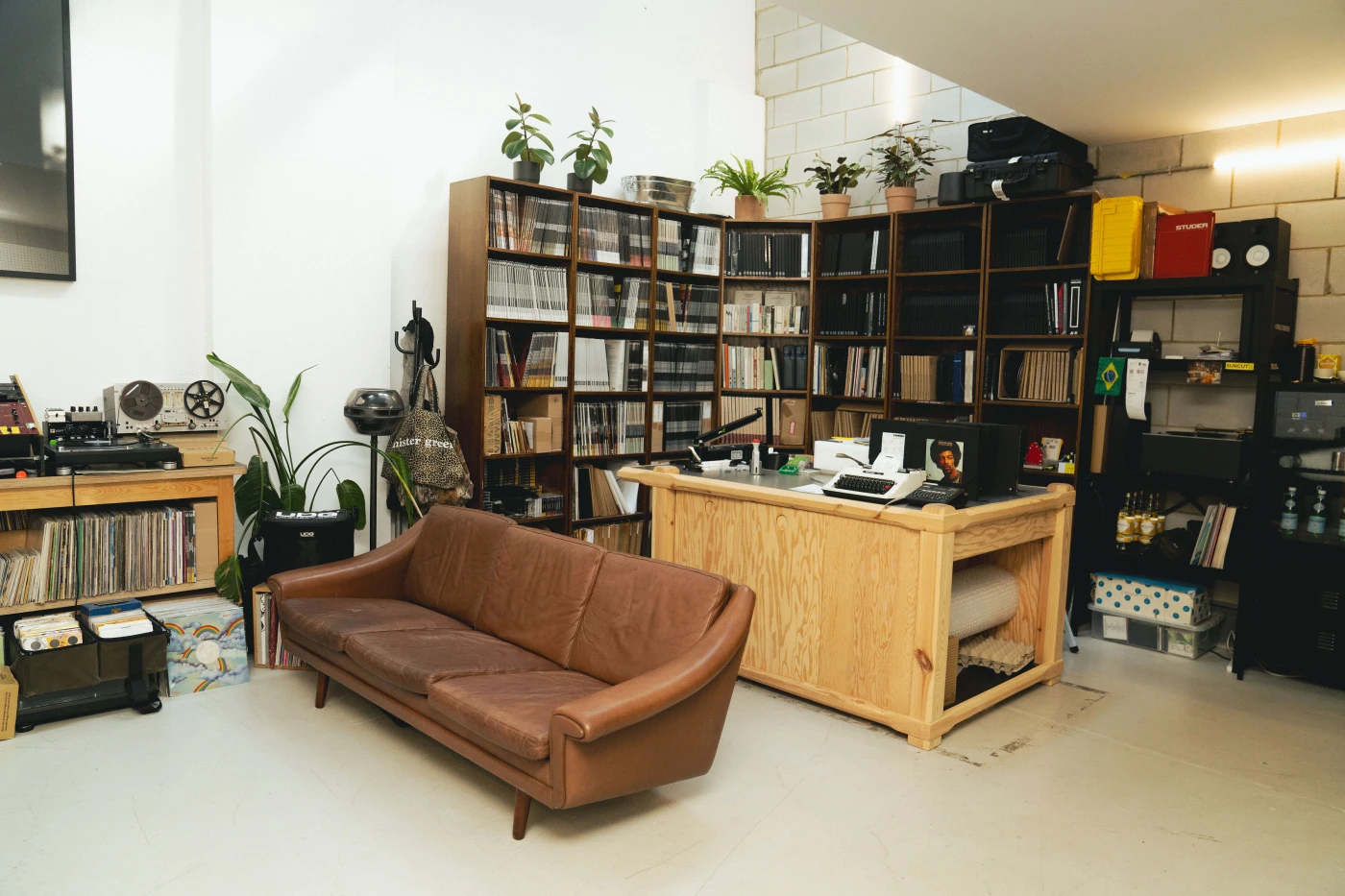
Elsewhere in the studio, alongside the main monitor system, sits a deliberately average pair of speakers, used to check how a recording sounds on something closer to an everyday set-up. “If it still sounds good coming out of a bad pair of speakers, that’s usually a pretty good sign,” Neal says.
For all the nostalgia that tends to gather around analogue formats, very little about the work itself is nostalgic. Reel-to-reel has its own technical grammar, from different speeds and EQ standards to the requirements of individual machines, and although the simplest production model would have been to settle on a single specification, Night Dreamer instead produces tapes according to the machines on which they will eventually be played.
“It makes the whole thing much more time-consuming, especially when you’re busy and every order can be slightly different, but it feels important to broaden the reach and make it possible for more people to get into reel-to-reel.”
That preference for the more exacting route extends beyond the tape itself. The packaging went through close to ten prototypes before Night Dreamer arrived at something that could hold the reel securely while retaining the functional character of an archival object, complete with credits, tape specifications and tick sheets.
“I wanted it to feel archival, like something that had come straight from the studio or been pulled from the vaults,” Neal says. “A lot of it was simply making something, living with it, realising what wasn’t working and doing it again.”
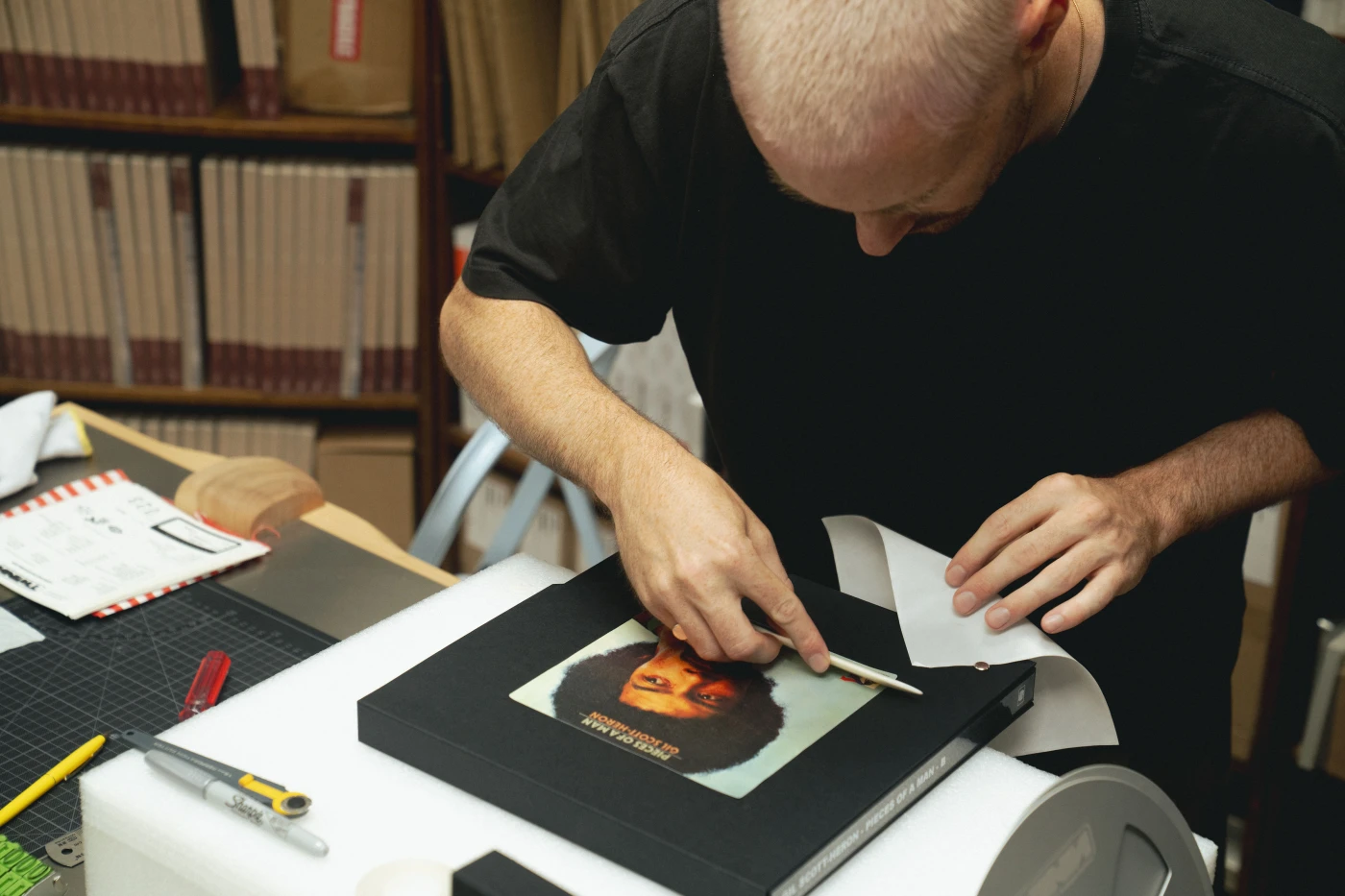 TWINN developed through precisely that gap between expectation and experience, with decisions changing only once something had been built, handled or listened to for long enough to expose what was not yet right. “I started this project with the mindset of: why wait, let’s just go, go, go. I quickly realised that was completely the wrong approach.”
What initially looked like delay gradually became useful, with research uncovering further technical questions, prototypes creating new practical problems and mistakes often revealing the next version more clearly. “Eventually time became the ally. The longer the process went on, the more I learnt, and actually the more mistakes we made, the better the project got.”
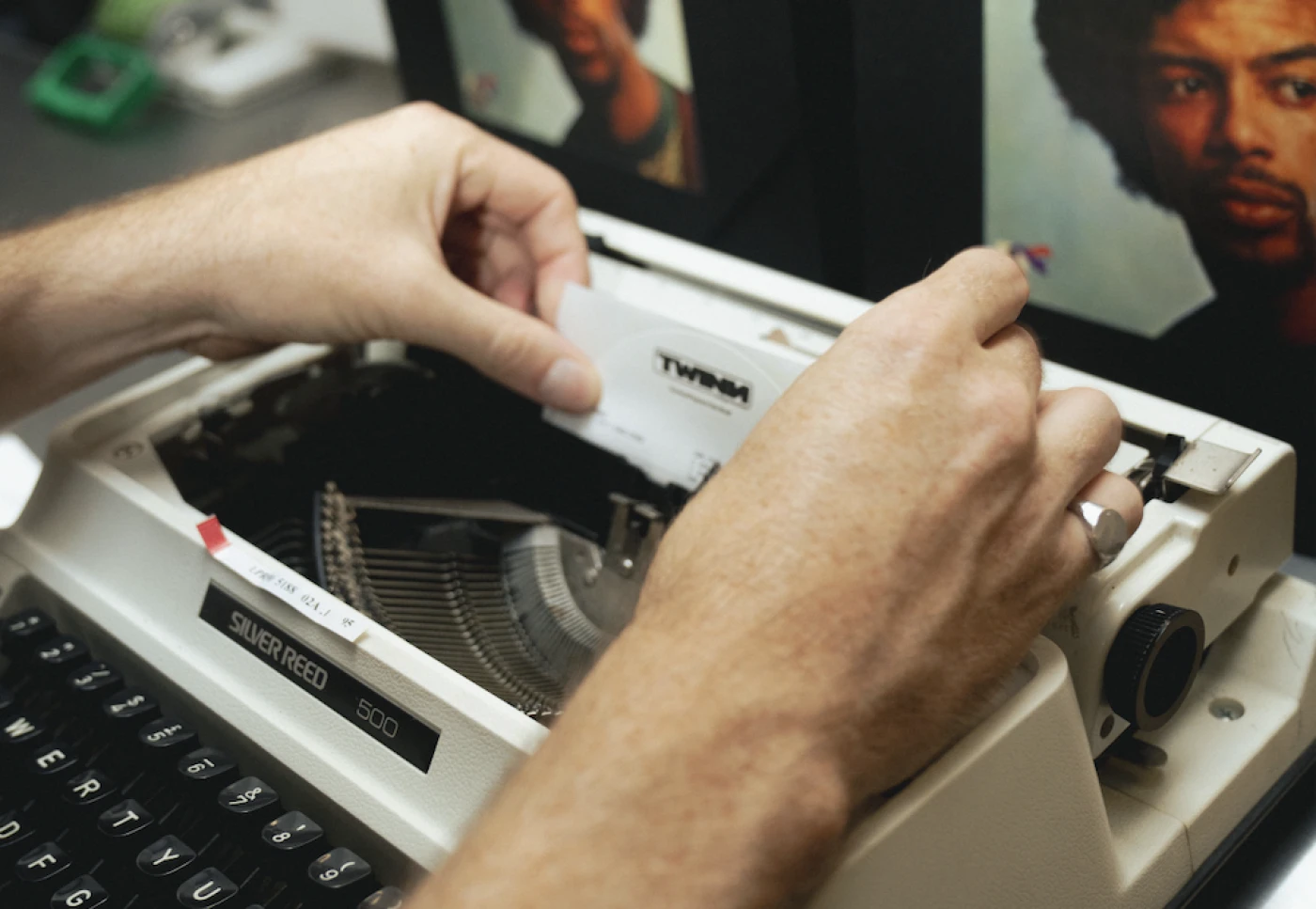
On an ordinary day at Hackney Downs Studios, the work can move between making up a release, developing future projects and working on packaging at a typewriter, indeed the latter of which Neal uses partly because of the physical trace it leaves behind. “If you hit the keys hard enough, they actually indent the card,” he says. “It sort of feels like something that’s lived a little.”
Other traces are less visible. Because each TWINN copy is duplicated in real time, an album is heard again and again, all the way through, until details that may have seemed incidental on the first listen begin to surface simply through prolonged attention.
“You get to know the recording in a completely different way,” Neal says. “You spend hours in the company of these albums and, honestly, it’s a privilege.”
By the time a reel leaves the studio, much of what shaped it has disappeared from view: the negotiation required to access the master, the condition it arrived in, the calibration of the machines, the failed prototypes, the specification decisions and the hours spent listening while one reel slowly became another. For Neal, the moment that best captures the process happens before there is anything finished to look at.
“I wish everyone could experience playing the original tapes for the first time,” he says. “That moment of hearing them and getting the confirmation that, yeah, this is going to work.”


